Juneteenth: Remembering Freedom, History, and Resilience
What Is Juneteenth?
Juneteenth is a day of remembrance, reflection, and celebration commemorating the end of slavery in the United States. It honors the resilience, perseverance, and contributions of African Americans throughout American history and serves as a reminder of the continuing pursuit of freedom, justice, and equality.
Who Does Juneteenth Honor?
Juneteenth honors the millions of African men, women, and children who endured slavery in North America, as well as the generations who fought for freedom, civil rights, human dignity, and equal opportunity.
It also honors those who preserved the memory of emancipation through family traditions, community celebrations, education, and advocacy.
When Did Juneteenth Begin?
Juneteenth traces its origins to June 19, 1865.
Although President Abraham Lincoln issued the Emancipation Proclamation on January 1, 1863, freedom was not immediately enforced in all Confederate territories during the Civil War.
On June 19, 1865, Union Major General Gordon Granger arrived in Galveston, Texas, and issued General Order No. 3, announcing that enslaved people in Texas were free.
This date became known as “Juneteenth,” combining the words “June” and “nineteenth.”
Where Did Juneteenth Begin?
Juneteenth began in Galveston, Texas, and was first celebrated by newly freed African Americans in 1866.
Over time, the observance spread throughout Texas and eventually across the United States.
Why Is Juneteenth Important?
Juneteenth represents one of the most significant milestones in American history. It symbolizes the enforcement of freedom for the last large population of enslaved African Americans following the Civil War.
The day serves as a reminder that freedom, justice, and human dignity are principles that must be protected and passed to future generations.
Today, Juneteenth is observed through educational programs, historical commemorations, family gatherings, cultural events, community service, music, prayer, and celebration.
The 400-Year Historical Commemoration
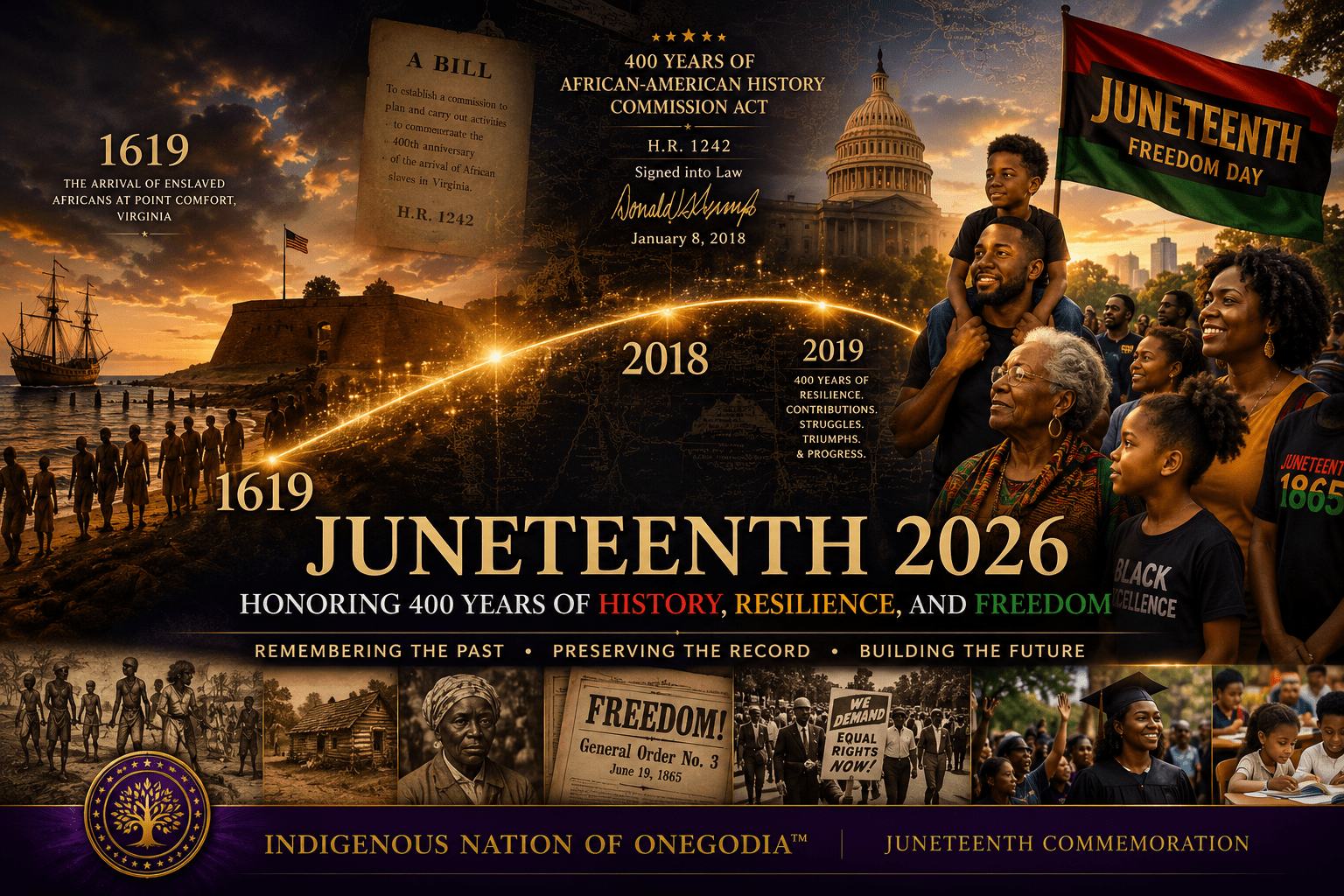
As Americans reflected on the broader African American experience, Congress passed H.R. 1242, the 400 Years of African-American History Commission Act.
On January 8, 2018, President Donald J. Trump signed the legislation into law, establishing a federal commission to coordinate activities commemorating the 400th anniversary of the arrival of Africans at Point Comfort, Virginia, in 1619.
The commission was tasked with developing educational programs, historical events, and national commemorations recognizing the contributions, sacrifices, struggles, and achievements of African Americans over four centuries of American history.
The 1619–2019 commemoration provided an opportunity for communities across the nation to study and reflect upon this history and its continuing impact on American society.
How Did Juneteenth Become a Federal Holiday?
While Juneteenth had been celebrated for more than 150 years, national recognition came after decades of advocacy by communities, educators, historians, and civil rights leaders.
A key figure in this effort was Opal Lee of Texas, often known as the “Grandmother of Juneteenth,” who spent years advocating for federal recognition of the holiday.
On June 17, 2021, President Joe Biden signed the Juneteenth National Independence Day Act into law, officially establishing Juneteenth as a federal holiday of the United States.
Juneteenth National Independence Day became the first new federal holiday established since Martin Luther King Jr. Day.
A Reflection for the Indigenous Nation of Onegodia™
As we observe Juneteenth, we remember the struggles endured by generations before us and honor the enduring values of freedom, identity, dignity, self-determination, faith, community, and human worth.
We recognize the importance of preserving historical truth, teaching future generations, and building communities grounded in justice, understanding, and mutual respect.
Juneteenth reminds us that freedom is not merely a historical event—it is a continuing responsibility.
May we remember the past, preserve the record, and help build a future where every person is recognized as a child of God and treated with dignity and respect.
Historical Timeline
1619 — Arrival of Africans at Point Comfort, Virginia.
January 1, 1863 — Emancipation Proclamation issued.
June 19, 1865 — General Order No. 3 announced in Galveston, Texas.
1866 — First Juneteenth celebrations held.
1980 — Texas becomes the first state to officially recognize Juneteenth.
January 8, 2018 — H.R. 1242 signed into law, creating the 400 Years of African-American History Commission.
2019 — National commemoration of 400 years of African American history.
June 17, 2021 — Juneteenth National Independence Day signed into law as a federal holiday.
June 19, 2021 — First federal observance of Juneteenth.
Juneteenth 2026
June 19, 1865 • Galveston, Texas
Honoring Freedom, History, Resilience, and Legacy
1619 • 1865 • 2018 • 2021 • 2026
Remembering the Past • Preserving the Record • Building the Future
Indigenous Nation of Onegodia™ | Juneteenth Commemoration
There are no comments